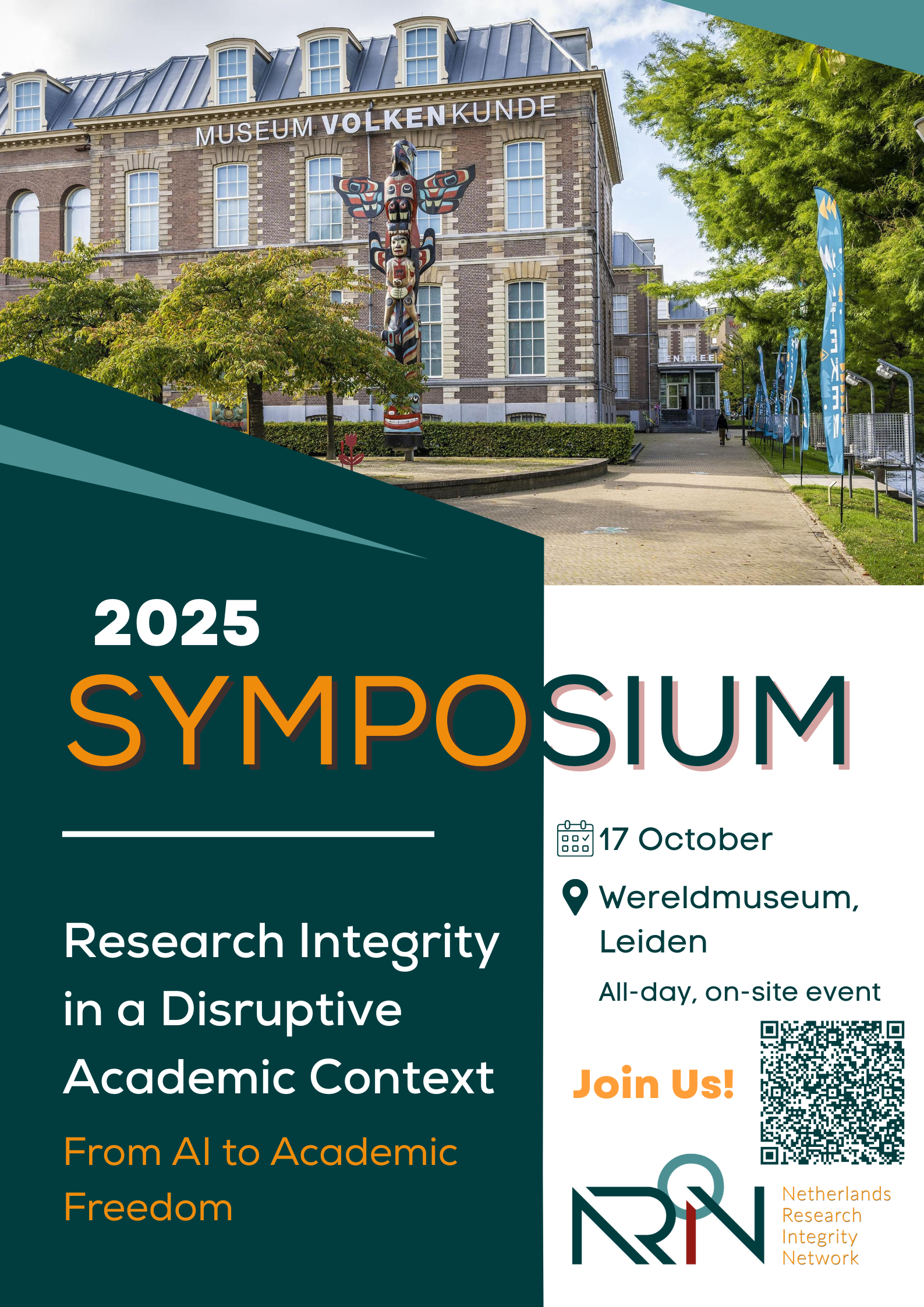
NRIN Annual Symposium 2025
Research Integrity in a Disruptive Academic Context: from AI to Academic Freedom
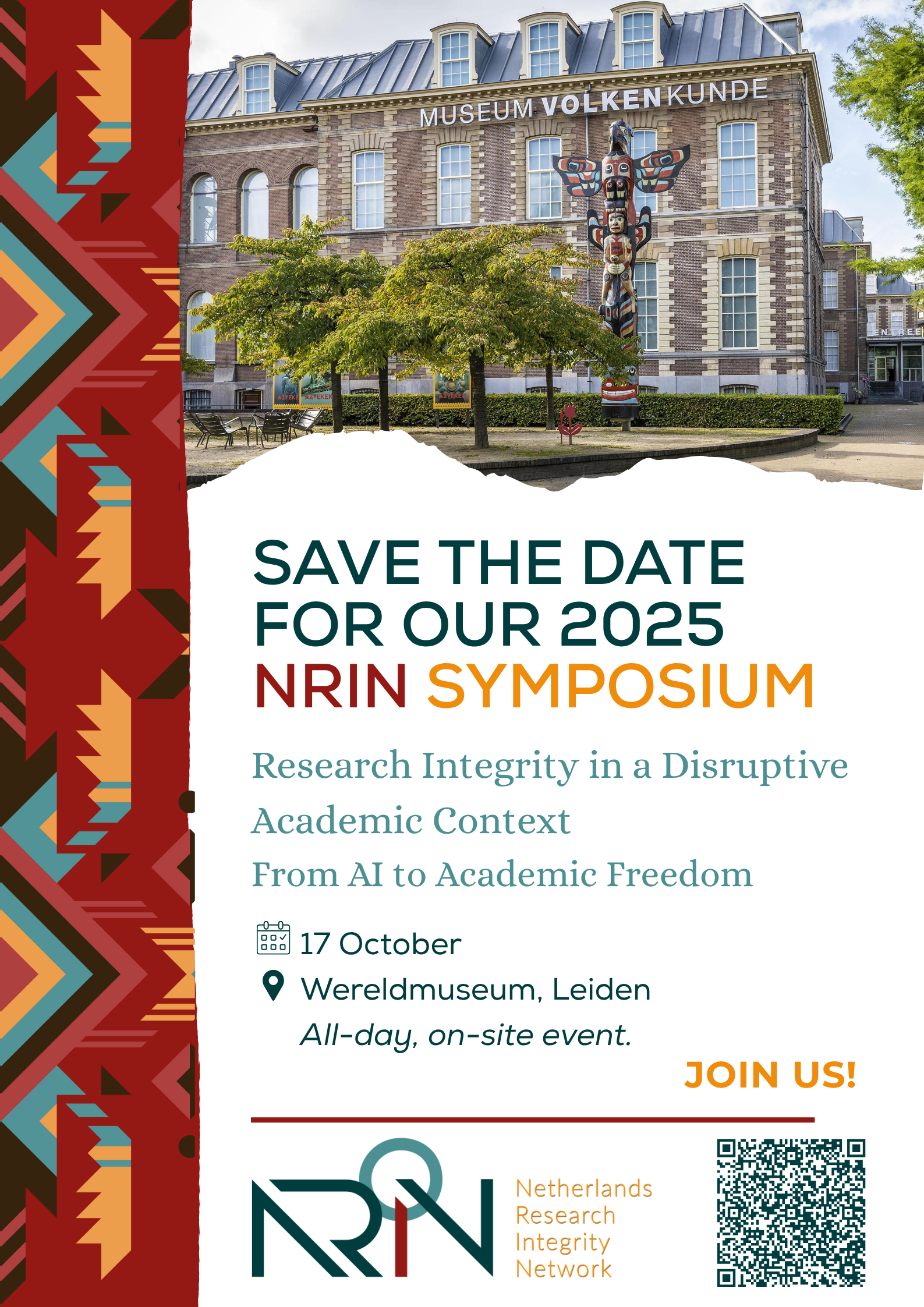
When: 17th October 2025
Where: Wereldmuseum, Leiden
We are excited to announce that the NRIN Annual Symposium 2025, with the central theme ‘Research Integrity in a Disruptive Academic Context: from AI to Academic Freedom’, will be held on 17th October 2025 at Wereldmuseum Leiden (see location here: link).
This year’s symposium will feature thematic presentations and workshop sessions designed to encourage interactive discussions, networking, and mutual learning among participants.
The symposium is a free onsite event (registration required!) open to both the Dutch and international academic communities. We invite academics, researchers, students, policy advisors, and other non-academic staff to join us at this event, which promises to spark discussions and critical reflections on pressing issues such as academic freedom, AI, trust in science, and the consequences for research integrity!
Contributions to the symposium are available only by invitation from the NRIN Annual Symposium Organising Committee. We are not accepting abstract proposals.
All relevant information will be shared on the NRIN webpage, the newsletter, and social media channels (LinkedIn and Bluesky).
NRIN Annual Symposium Organising Committee
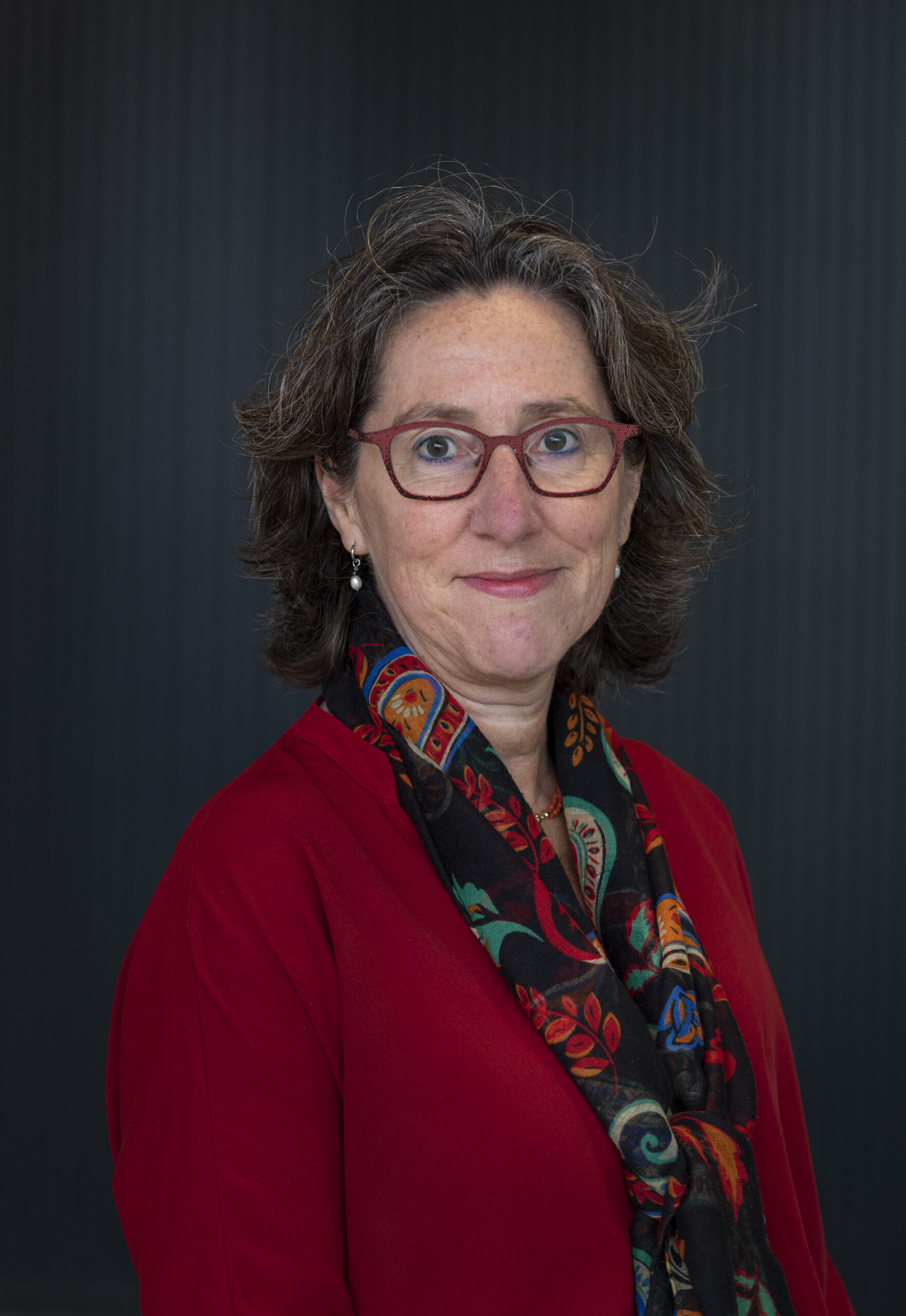
prof. dr. Mariëtte van den Hoven
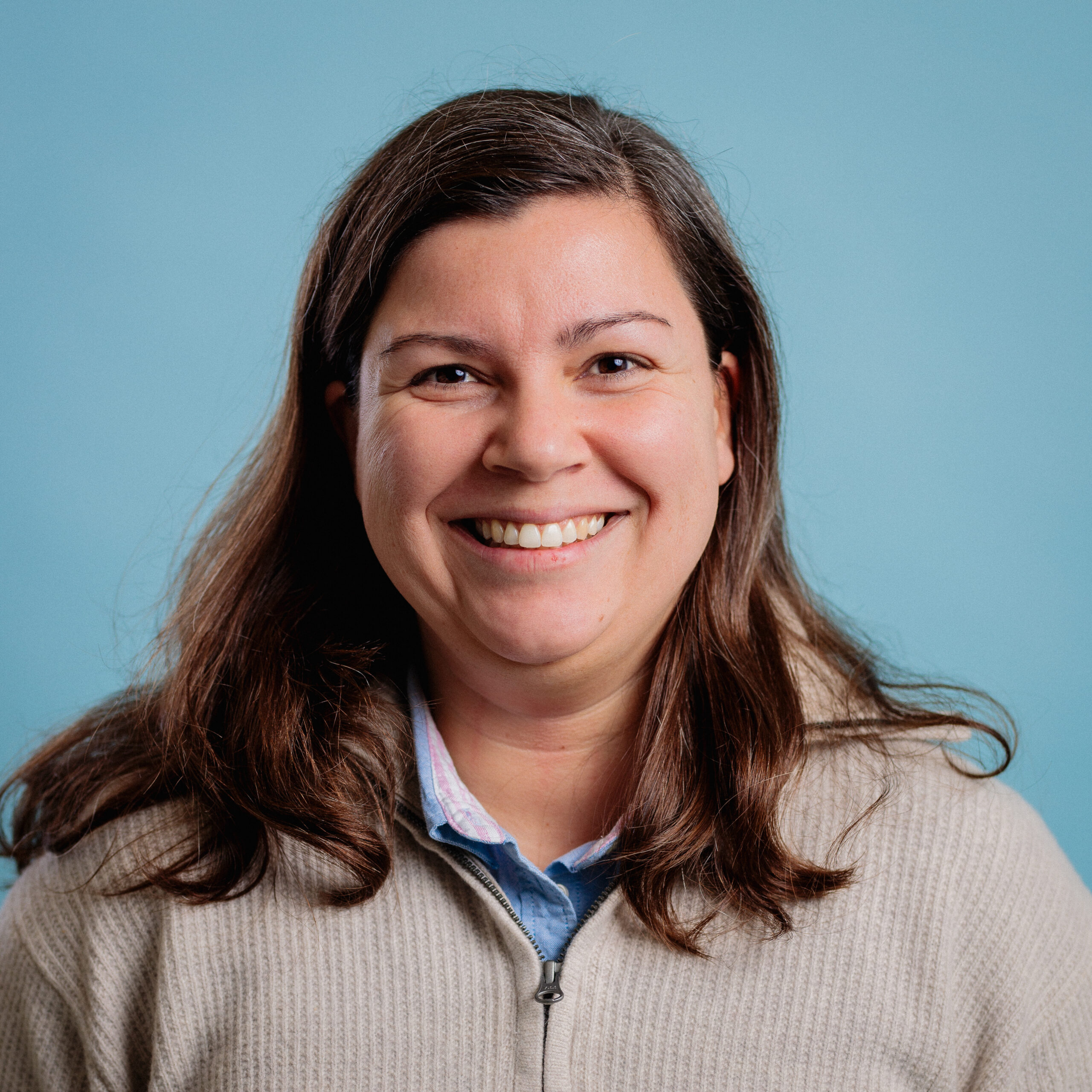
dr. Rita F. Alves dos Santos
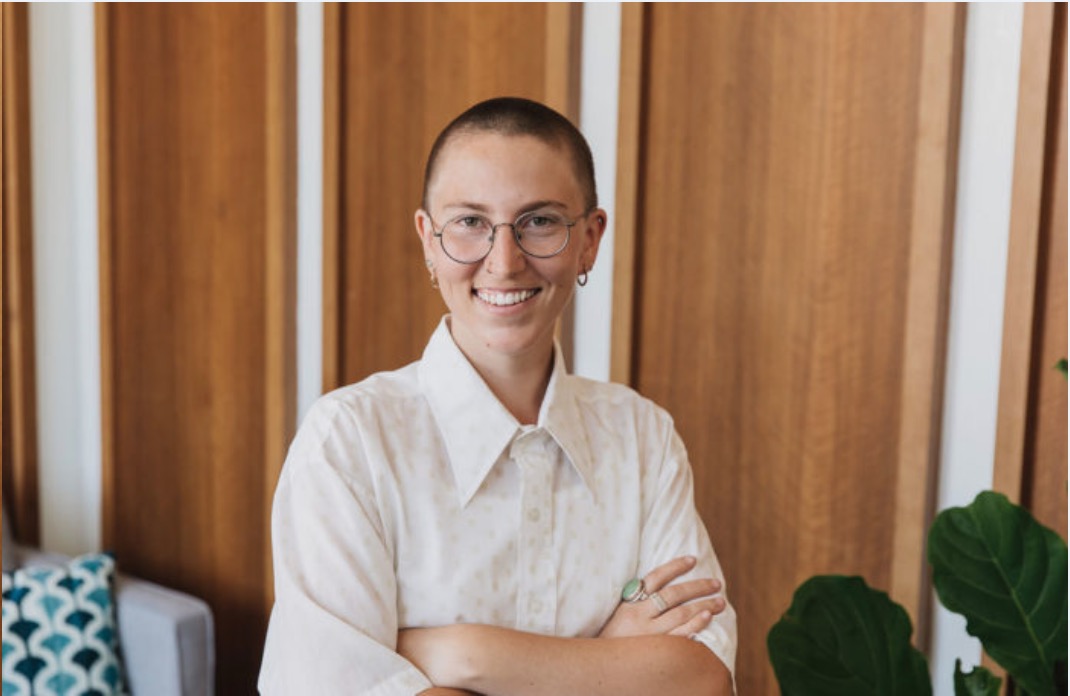
T. Honeysett
Program
|
09:30 – 10:00 |
Registration |
||
|
10:00 – 10:10 |
Grand Opening prof. dr. Mariëtte van den Hoven dr. Rita F. Alves dos Santos |
||
|
10:10 – 12:00 |
Are we living inside Aldous Huxley’s Brave New World? Perspectives on a rapidly evolving scientific world Part I (10:10 – 11:00): prof. dr. Peter-Paul Verbeek (UvA) – “Positive and negative ethics: connecting academic freedom and research integrity” Q&A session Part II (11:00 – 12:00) prof. dr. Caspar van den Berg (UNL) – Academic Freedom and Public Trust in Times of Pressure dr. Koen Leurs (Utrecht University) – “Societal impact, public engagement and research ethics in challenging times: for whom, with whom and what for are we co-creating knowledge?” Q&A session Chair: prof. dr. Mariëtte van den Hoven (NRIN Chair) |
||
|
12:00 – 13:00 |
Workshop – AI & Scientific Integrity dr. Martin Sand (TU Delft) |
Workshop – Exploring the opportunities for Diamond Open Access as a catalyst for increased research quality and integrity Jeroen Sondervan (Open Science NL) |
Workshop – Publication Fraud – a focus on images and data dr. Marcel van der Heyden (UMC Utrecht) – focus on images & prof. dr. Corine Verhoeven (Amsterdam UMC) – focus on data |
|
13:00 – 14:00 |
Lunch |
||
|
14:00 – 14:45 |
Freedom and Integrity in Research: Interdependence and Tensions – prof. dr. André Nollkaemper (UVA) Chair: prof. dr. Mariëtte van den Hoven (NRIN Chair) |
||
|
14:45 – 15:45 |
Workshop – Trust in Science dr. Charlotte Bruns (Erasmus University Rotterdam) & dr. Amalia Kallergi (Radboud University) |
Workshop – Scientific Activism dr. Nina de Roo (Wageningen Socio & Economic Research) & dr. Martijn Dekker (UvA) |
Workshop – Integrity for whom? Power, bias, and justice in research dr. Krishma Labib (VU Amsterdam) & María de los Ángeles Crespo López (VU Amsterdam and Amsterdam UMC) |
|
15:45 – 16:30 |
Shaping the Research Integrity landscape in the Netherlands – opportunities and threats prof. dr. Mariette vd Hoven & dr. Rita F. Alves dos Santos |
||
|
16:30 – 17:00 |
Closing ceremony and Drink reception prof. dr. Mariëtte van den Hoven dr. Rita F. Alves dos Santos |
||
Speaker Details
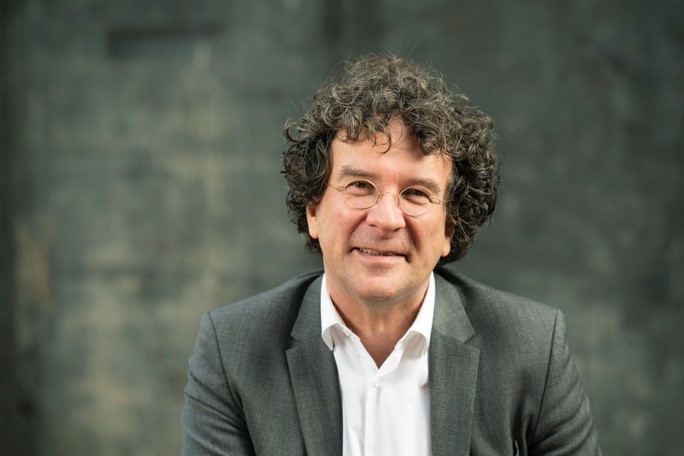
prof. dr. Peter-Paul Verbeek
Positive and negative ethics: connecting academic freedom and research integrity
Abstract:
In current times of polarization, universities are facing challenges that come both from ‘within’ and from ‘outside’. From within, the new forms of activism that have emerged over the past years – for instance regarding collaboration with the fossil fuel industry or with Israel – urge universities to balance academic freedom and societal responsibility in new ways. From outside, government interference with universities is growing, ranging from budget cuts and laws against international students to interference in education and research agendas. These challenges have serious implications for academic freedom. Activism can become so intimidating that students and staff do not dare to speak up anymore, or to teach and investigate every subject they find important. And government interference challenges the ways in which universities function independently.
In this talk, I will address what this implies for academic integrity. Based on the distinction between ‘positive’ and ‘negative’ freedom (freedom from interference versus freedom to do something) I wil distinguish positive and negative ethics: preventing to happen what we do not want versus providing conditions for what we do want to happen. This distinction will make it possible to connect research integrity and societal responsibility in a new way.
Biography:
Prof.dr.ir. P.P.C.C. (Peter-Paul) Verbeek (1970) is Rector Magnificus and member of the Executive Board of the University of Amsterdam. Verbeek is also Professor of Philosophy and Ethics of Science and Technology in a Changing World at the University of Amsterdam. His research and teaching focus on the relationship between humans and technology, viewed from an ethical perspective.
He previously was Distinguished Professor of Philosophy of Technology at the Department of Philosophy of the University of Twente, where he was chair of the Philosophy of Human-Technology Relations research group and co-director of the DesignLab of the University of Twente. He was also honorary professor of Techno-Anthropology at Aalborg University, Denmark. He also served, among other things, as chairperson of the UNESCO World Commission for the Ethics of Science and Technology (COMEST), vice-chairperson of the board of the Rathenau Institute and chairperson of the KNAW Commission on the Freedom of Science. More information: here
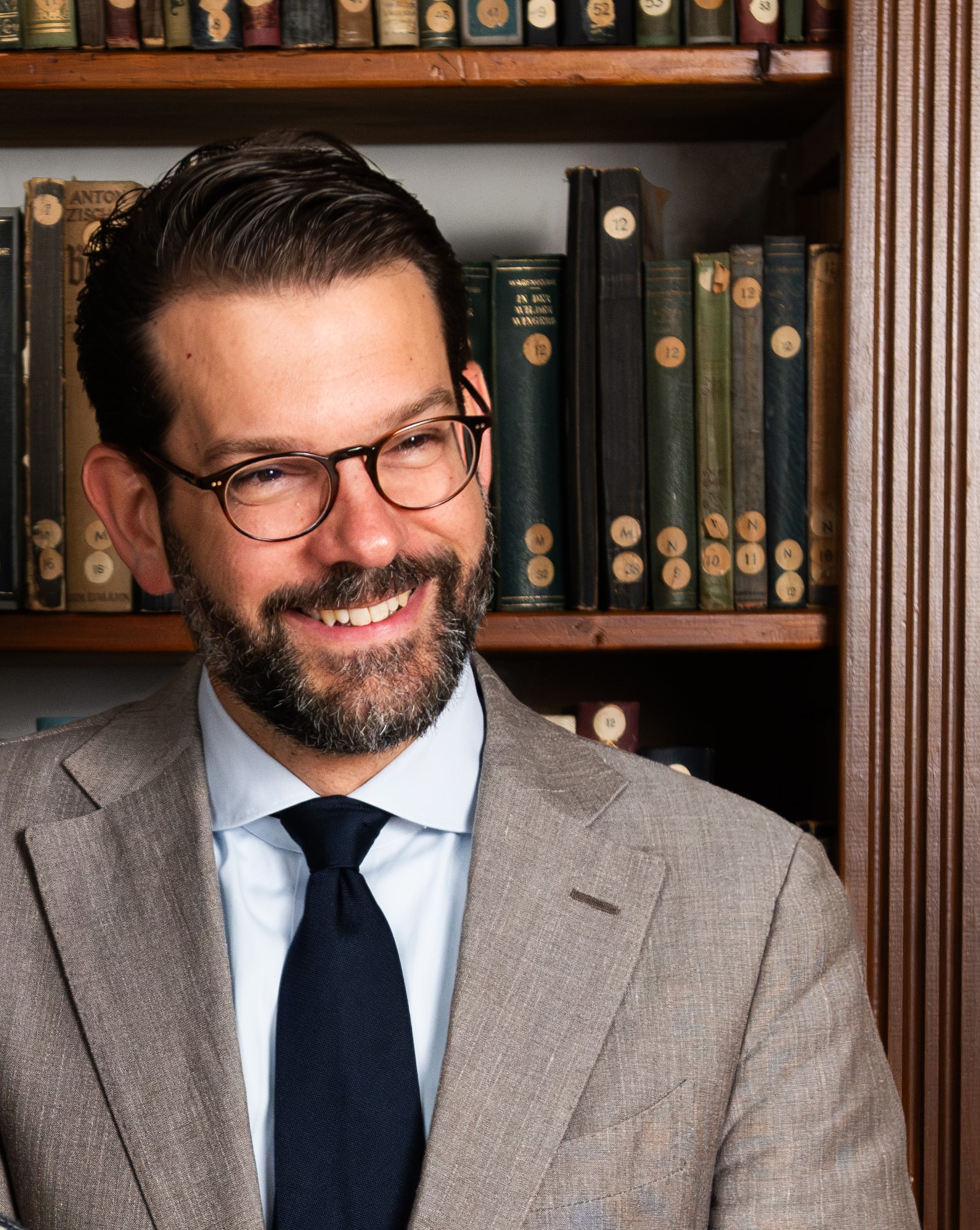
prof. dr. Caspar van den Berg
Academic Freedom and Public Trust in Times of Pressure
Abstract:
The speech highlights the increasing risks of political interference in science, drawing on examples from the United States, The Netherlands and other European countries. Political pressure, whether through financial threats, restrictive rhetoric, or attempts to steer university governance, erodes academic freedom and weakens public trust in research. At the same time, universities bear a clear responsibility to safeguard integrity, transparency, and accountability. The Dutch model of self-regulation, exemplified by the Code of Conduct for Research Integrity and recent measures on internationalization, demonstrates how the sector can take ownership by strengthening its practices and building societal trust, thereby reducing the propensity for political intervention. Nonetheless, vulnerabilities persist: academic freedom lacks explicit legal protection in the Netherlands, and universities have at times been slow to respond to emerging challenges. The speech therefore stresses the importance of fostering a culture of responsibility and open dialogue as essential to protecting the independence of science and sustaining its role as a cornerstone of democracy and social progress.
Biography:
Caspar van den Berg has served as President of Universities of the Netherlands since 1 June 2024, appointed for a four-year term. Before assuming this role, he was dean and professor of public administration at the University of Groningen. Between January 2022 and September 2024, he was a member of the Dutch Senate for the VVD. In 2021, alongside his position in Groningen, he was appointed endowed professor of Transitions in the Public Sector at Leiden University. Van den Berg studied at University College Utrecht, earned a master’s degree from the London School of Economics, and completed his PhD at Leiden University.
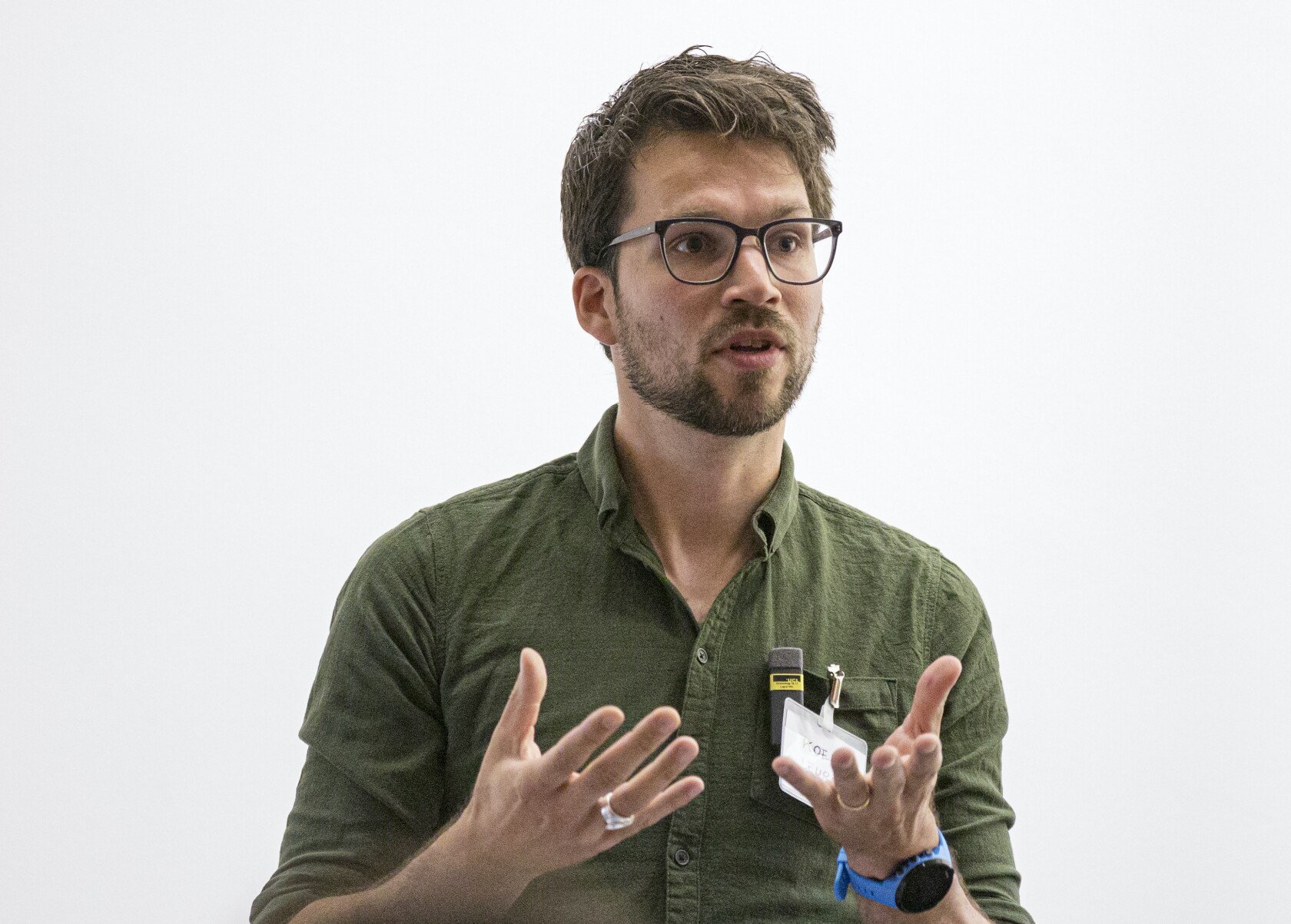
dr. Koen Leurs
Societal impact, public engagement and research ethics in challenging times: for whom, with whom and what for are we co-creating knowledge?
Abstract:
Amidst increasingly polarized societal and political climates, research on asylum migration—especially involving digital technologies—faces challenges of scrutiny and limited access. Drawing on recent experiences of a multidisciplinary team study of smartphone screening in the Dutch asylum procedure, this talk interrogates the tensions between universities’ growing emphasis on public impact and engagement and the need to uphold established research ethics frameworks. I will discuss how governmental resistance to academic inquiry illustrates the blurred boundaries between academic autonomy and external pressure, and highlights the absence of clear “rules of engagement” for deciding with whom academic researchers should (or should not) collaborate in pursuing impact. I will explore the demands placed on researchers to publicly defend their work against (the spokespersons of) governmental and corporate actors, emphasizing the need for new research literacies (such as repurposing Freedom of Information as a research method) and ethical safeguards. Building on debates within migration and border studies, I will also critically reflect on how the principle of “do no harm” is complicated in contexts where research seeks to expose injustices and human rights violations. Some scholars have even suggested that, when confronting unjust systems, an ethics of “doing harm” to oppressive structures might be warranted—a provocative inversion that challenges conventional research ethics frameworks. In my talk I seek to open discussion on the ethical ambiguities and responsibilities facing researchers working in contentious fields, encouraging critical engagement with both university impact agendas and the evolving demands of ethical praxis in adversity.
Biography:
Koen Leurs is an associate professor in Gender, Media and Migration Studies at the Graduate Gender Program, Department of Media and Culture, Utrecht University, the Netherlands. His research interests are migration, borders, youth culture and digital technologies, co-creative methodologies and ethics. At Utrecht University he is the chair and co-founder of the Faculty Ethics assessment Committee Humanities (FEtC-H) General Chamber. Currently, Leurs is part of the Management Committee of the Cost-Action DATA-MIG CA22135 – Data Matters: Sociotechnical Challenges of European Migration and Border Control. Recently, Leurs was the PI of the Team Science project Co-designing a fair digital asylum procedure, funded by the Digital Society (‘DiSa’) programme (a research programme by all fourteen Dutch research universities) and COMMIT/, a public-private ICT research community. He recently co-edited Doing Digital Migration Studies (Amsterdam University Press, 2024) and the Handbook of Media and Migration (Sage, 2020) and published the monograph Digital Migration (Sage, 2023).
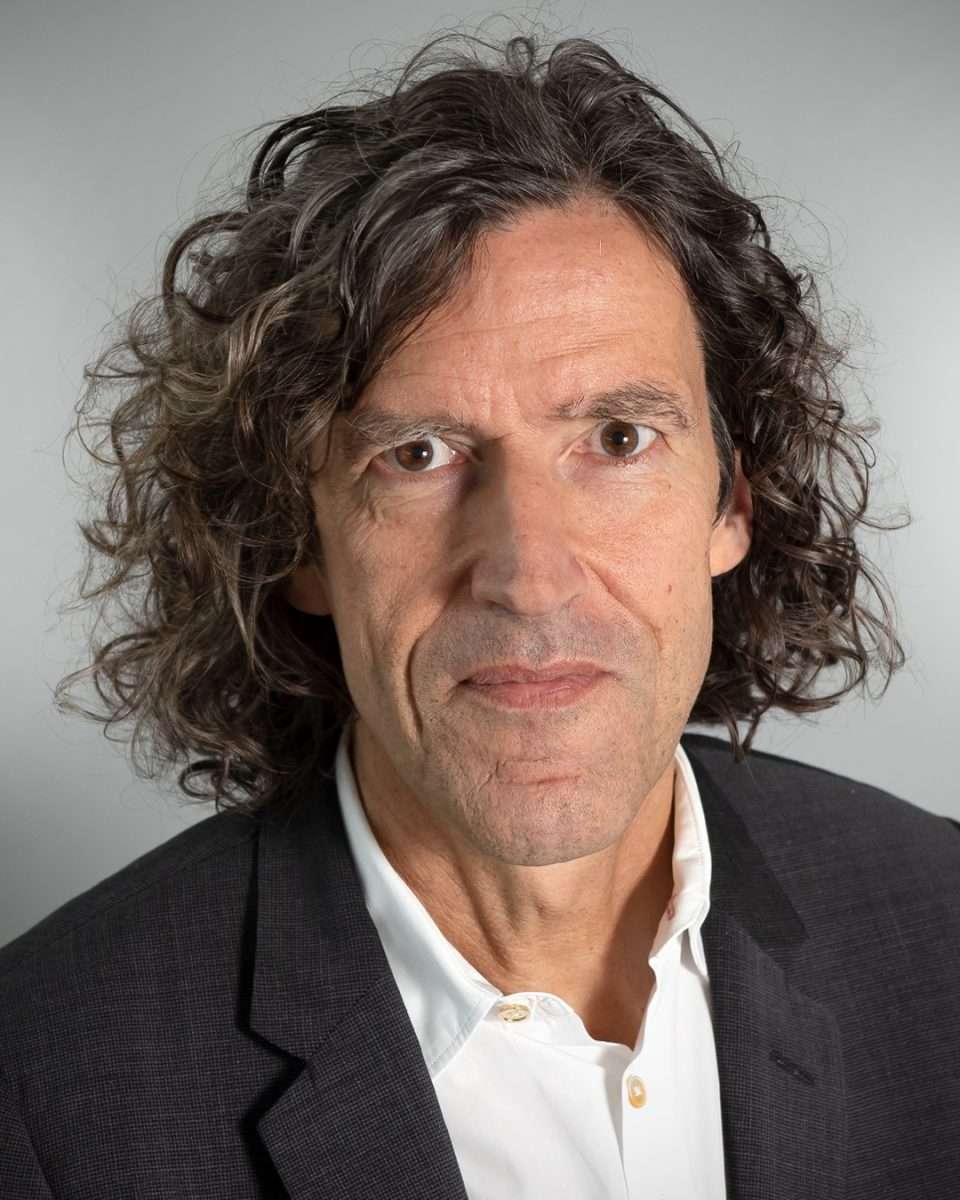
prof. dr. André Nollkaemper
Freedom and Integrity in Research: Interdependence and Tensions
Abstract:
Academic freedom and research integrity are often treated as separate domains — the first concerned with the right to ask questions, the second with the duty to answer them responsibly — yet in practice they are inseparably linked. Drawing on the recent KNAW report on threats to academic freedom and the Netherlands Code of Conduct for Research Integrity, in this talk I will discuss how erosion of academic freedom may impact on research integrity: researchers who cannot freely choose their topics, speak without fear of intimidation, collaborate across borders, or debate controversial issues cannot uphold the principles of honesty, transparency, independence, scrupulousness, and responsibility. At the same time, the flipside deserves equal attention: some interventions that appear to limit freedom can also protect integrity — for example, safeguards against harassment, or careful restrictions on high-risk collaborations. A key challenge is designing policies and frameworks that protect both freedom and integrity together.
Biography:
Andre Nollkaemper is chair of the Committee for the pursuit of scientific freedom of the Royal Academy of Arts and Sciences of the Netherlands.. He is also Distinguished University professor International Law and Sustainability at the University of Amsterdam and Academic Director of SEVEN, the interdisciplinary climate institute of the University of Amsterdam. Previously, he was dean of the Amsterdam Law School, (interim) member of the Board of the University of Amsterdam, and President of the European Society for International Law.
Workshop Details
Morning Workshops
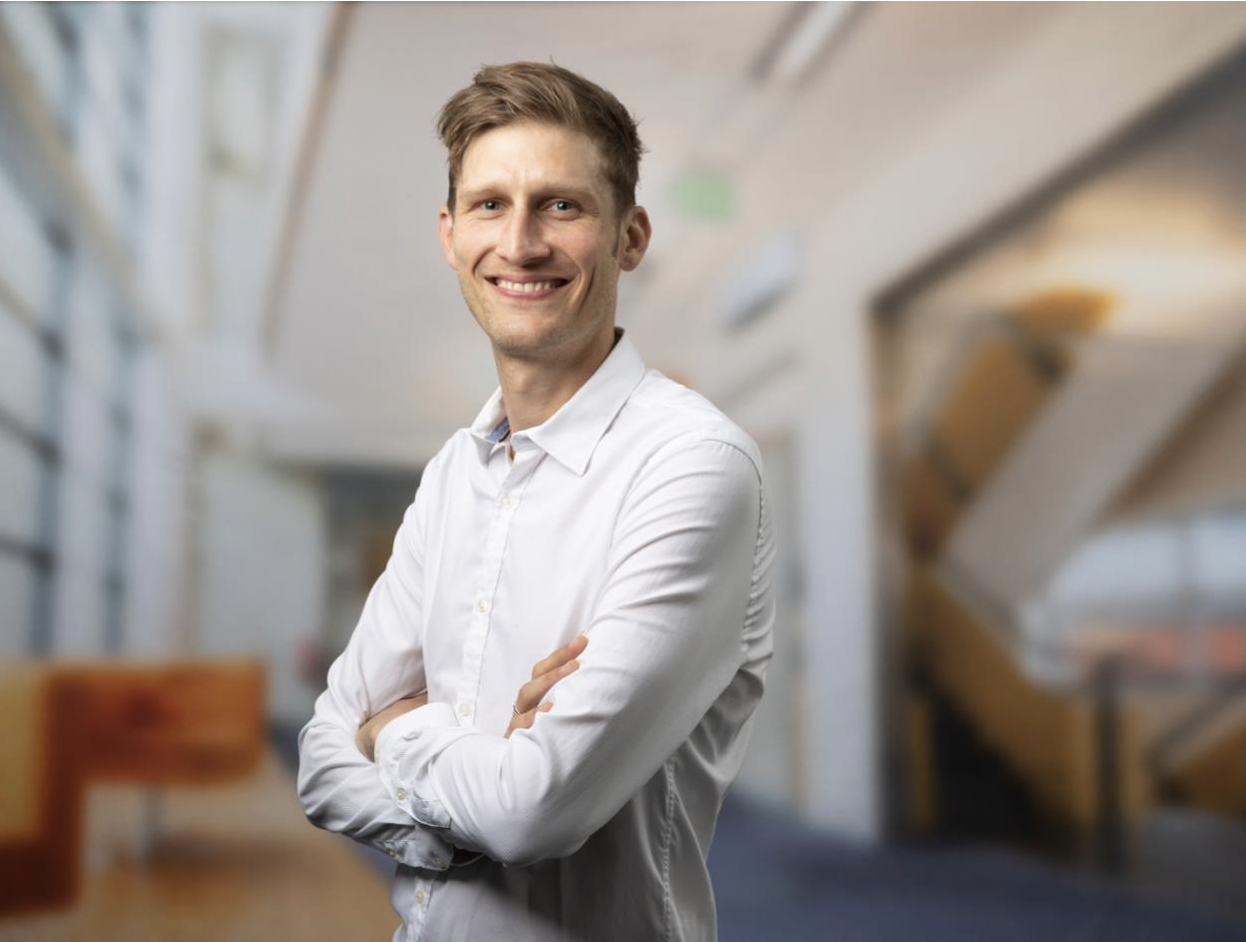
dr. Martin Sand
AI & Scientific Integrity
Abstract:
It is undeniable that Artificial Intelligence (AI) is increasingly used in various activities in science: To generate ideas and hypothesis, to paraphrase and research existing literature, to analyze data and to create text. According to a recent editorial in the Proceedings of the National Academy of Science, AI “tools and processes challenge core norms and values in the conduct of science, including accountability, transparency, replicability, and human responsibility.” (Blau et al., 2024) It seems obvious that the uncritical adoption of AI generated text in a publication without flagging the text as a quote with AI as its source violates more or less a number of principles in the Netherlands Code of Conduct, including the principles to “present sources, data and arguments in a scrupulous way”, “be transparent about the method and working procedure” and “When making use of other people’s ideas, procedures, results and text, do justice to the research involved and cite the source accurately” (all 3.4.). However, as Diomidis Spinelli suggests, since AI “generated articles are not exact copies of others, they are difficult to identify with existing plagiarism detection tools based on text similarity, while automatically recognizing their AI provenance […] will likely become an uphill struggle as generative AI tools become more sophisticated and therefore produce output that will be increasingly difficult to detect.” (Spinellis, 2025)
The workshop is intended to discuss the challenges and chances of AI in relation to Scientific Integrity:
- Why and when is it wrong to use AI in science?
- How can we identify illegitimate AI usage in science and how should we sanction it?
- How can we prevent or steer scientific activity away from illegitimate AI usage?
References and Reading:
Blau, W., Cerf, V. G., Enriquez, J., Francisco, J. S., Gasser, U., Gray, M. L., Greaves, M., Grosz, B. J., Jamieson, K. H., Haug, G. H., Hennessy, J. L., Horvitz, E., Kaiser, D. I., London, A. J., Lovell-Badge, R., McNutt, M. K., Minow, M., Mitchell, T. M., Ness, S., . . . Witherell, M. (2024). Protecting scientific integrity in an age of generative AI. Proceedings of the National Academy of Sciences, 121(22), e2407886121. Link
Spinellis, D. (2025). False authorship: an explorative case study around an AI-generated article published under my name. Research Integrity and Peer Review, 10(1), 8. Link
Biography:
Dr. Martin Sand is an Assistant Professor of Ethics and Philosophy of Technology at TU Delft. He was a member of the NIAS-Lorentz theme group on “Accountable and Explainable Medical AI” at the Netherlands Institute for Advanced Study and contributes with this research to the Delft Digital Ethics Center. He is interested in technological futures and has developed a hermeneutic approach to those narratives. Currently, he studies the status and value of digital utopias. As a teacher, he aims to empower my colleagues in their role as educators and create an inclusive atmosphere in the classroom. He is the responsible course coordinator for two large Engineering Ethics courses and the mandatory PhD course on Scientific Integrity of TU Delft’s Graduate School.
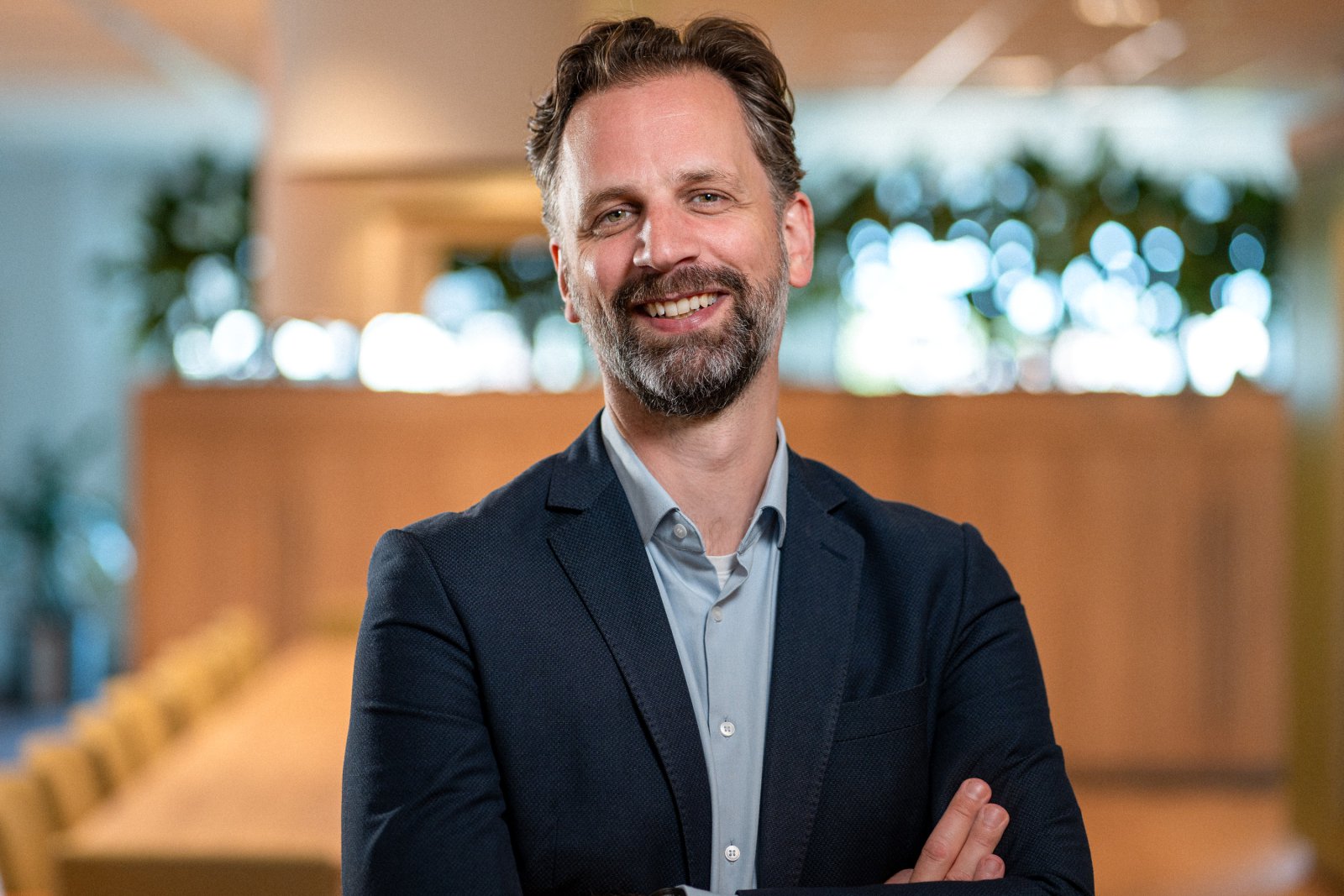
Jeroen Sondervan
Exploring the opportunities for Diamond Open Access as a catalyst for increased research quality and integrity
Abstract:
Diamond open access (DOA) is gaining increasing attention from universities, research funders, libraries, and publishing infrastructures as a value-driven and inclusive publishing model. Unlike commercial open access, DOA operates without author or reader fees, removing financial barriers and promoting a more equitable and sustainable scholarly communication system. In the Netherlands, Europe, and other global regions, a growing number of initiatives are contributing to a richer and more diverse publishing landscape. While often small or fragmented, these developments reflect a gradual, step-by-step approach towards establishing a solid foundation for DOA. At its heart, DOA embraces key open science principles, such as transparency, diversity and inclusion, community ownership. And not unimportantly the decoupling of publication decisions from financial transactions. It therefore offers a pathway to enhance research quality and integrity. This interactive workshop will explore how DOA can be effectively organized and supported in the Netherlands in collaboration with other initiatives in Europe. Participants will engage with key questions such as: How can the DOA publishing model contribute to better, more trustworthy research? What infrastructure and funding models are needed to scale Diamond open access? What incentives are needed to make DOA a success? Join this workshop to discuss actionable strategies for embedding DOA into the (Dutch) research ecosystem and shaping a high quality, more equitable, transparent future for scholarly publishing.
Biography:
Between 2007 and 2016, Jeroen worked as a publisher at Amsterdam University Press. There he oversaw the creation of many open access books and was closely involved in the inception and development of diamond open access journals. In 2015, Jeroen worked as an open access publishing consultant at Utrecht University Library. Then, in 2019, he took on the role of programme leader open access at the Utrecht University Open Science Programme. In this capacity, he actively promoted and facilitated the culture shift towards Open Science, alongside the themes such as recognition & rewards, public engagement, FAIR data and open software, and open education. As of the 1st of April 2023, he joined the Dutch Research Council (NWO) as open access policy advisor and Programme Leader for Open Scholarly Communication at the national initiative Open Science NL. In Open Science NL, Jeroen will focus on open access, but will also broaden the scope to include open peer review, open research information and new ways of scholarly publishing.
Publication Fraud: a focus on images and data
Abstract:
In this workshop, participants will be challenged to identify data manipulation in images and research data outputs. We will collectively discuss the consequences of cases of scientific fraud on trust in science.
Workshop associated reading:
- The one hour fraud detection challenge. Van der Heyden, MAG Naunyn Schmiedebergs Arch Pharmacol, 394:1633-1640 (2021) Link
- Fraud and misconduct in science: the stem cell seduction. Implications for the peer review process. Van der Heyden MAG, Derks van de Ven, T, Opthof, T Neth Heart J 17:25-29 (2009) Link
Biographies:
prof. dr. Corine Verhoeven
Dr. Corine Verhoeven is appointed as a professor in Value-based Maternity Care, Amsterdam UMC. Her main research interest is in the evaluation of maternity and/or midwifery care and more specifically on optimising physiological labour and birth. However, she does emphasize other research to improve care for women. In her opinion it is important for all women to have a positive childbirth experience. Achieving this should be the challenge for all maternity care providers. Her research specialisation is merely on quantitative research methodes, although she also published several articles based on qualitative research. Being an epidemiologist, she has experience in different research methods, such as RCTs, systematic reviews and metaanalyses. Next to this, she is specialised in patient involvement; action research.
dr. Marcel van der Heyden
Marcel studied biology and obtained his PhD in the field of cancer research at the Utrecht University in 1995. Thereafter he worked on stem cell biology and then entered the field of cardiac arrhythmias in 2000. Currently, his research focus is on cardiac potassium ion channel pharmacology and ion channel trafficking.
Marcel teaches and writes on breaches in scientific integrity and its underlying drivers. He is Consulting Editor Scientific Integrity of the British Journal of Pharmacology, member of Springer Nature Editor Panel on Research Integrity, and member of the Committee Scientific Integrity of the Utrecht University. Furthermore, he coordinates the Responsible Conduct of Research PhD course at the Utrecht Graduate School of Life Sciences and teaches a similar course at the University of Vienna. Finally, he provides lectures on research integrity throughout the world for many years.
Afternoon Workshops
Trust in Science
Abstract:
This workshop adopts a conceptual and ethical lens to explore trust in science within higher education. Participants begin by grasping the concept of ‘warranted trust and distrust’ developed in the IANUS project, and by reflecting on the distinctions between interpersonal and institutional trust. Through a brief presentation and case–based small–group discussions, they examine what is commonly understood as building trust in science, such as transparency, integrity, and stakeholder engagement, and what erodes it, including misconduct and miscommunication. Emphasis is placed on understanding the complexity of what shapes trust in science, including uncertainty, authority, and evolving technological developments such as AI. Rather than prescribing solutions, the workshop creates space for an open dialogue among science communicators (e.g. researchers, professional staff) about the role of higher education in navigating and shaping trust in science.
Biographies:
dr. Amalia Kallergi
Dr. Amalia Kallergi is a postdoctoral researcher at the Institute for Science in Society, Radboud University (NL). Her work considers the ethical and societal implications of the life sciences and the various ways to include societal needs and values into research and innovation. While working for the IANUS project (Inspiring and Anchoring Trust in Science, Research and Innovation), Amalia focused on the dilemmas of the entangled scientist and on the role of science communication and open science for public trust in science.
dr. Charlotte Bruns
Dr. Charlotte Bruns is a postdoctoral researcher and lecturer at the School of History, Culture and Communication at Erasmus University Rotterdam, working on the science communication project Coordinated Opportunities for Advanced Leadership and Engagement in Science Communication in Europe (COALESCE). Until May 2025, she was part of the IANUS project focusing on Inspiring and Anchoring Trust in Science, Research and Innovation. Charlotte’s expertise lies in visual communication, including the (historical) use of photography and the functions of (moving) images in science communication.
Scientific Activism
Abstract:
In an era of heightened political polarization and waning public confidence in expertise, scientists are increasingly called upon to navigate the fraught intersection of research, personal conviction, and public advocacy. This workshop, co led by Dr. Nina de Roo (Wageningen University) and Martijn Dekker (University of Amsterdam), invites participants to interrogate the role of scientific knowledge—and the scientists who produce it—in contested societal issues.
Drawing on actual cases, we will explore a number of interrelated questions: How do scientists articulate and negotiate their own normative commitments while maintaining epistemic credibility? What strategies enable researchers to engage constructively in polarized debates without compromising methodological rigor or perceived impartiality? How can scientific institutions foster cultures of reflexivity that acknowledge the unavoidable entanglement of values, politics, and evidence?
In this interactive workshop, participants will map the spectrum of “scientific activism”—from quiet advocacy within disciplinary circles to overt public campaigning. We will examine the ethical trade offs of transparency about funding sources, personal beliefs, and potential conflicts of interest, as well as the risks and rewards of aligning with social movements.
The workshop aims not only to deepen scholars’ understanding of the sociopolitical dynamics that shape scientific authority, but also to empower them to act thoughtfully and ethically in a world where trust in science is both fragile and essential.
Biographies:
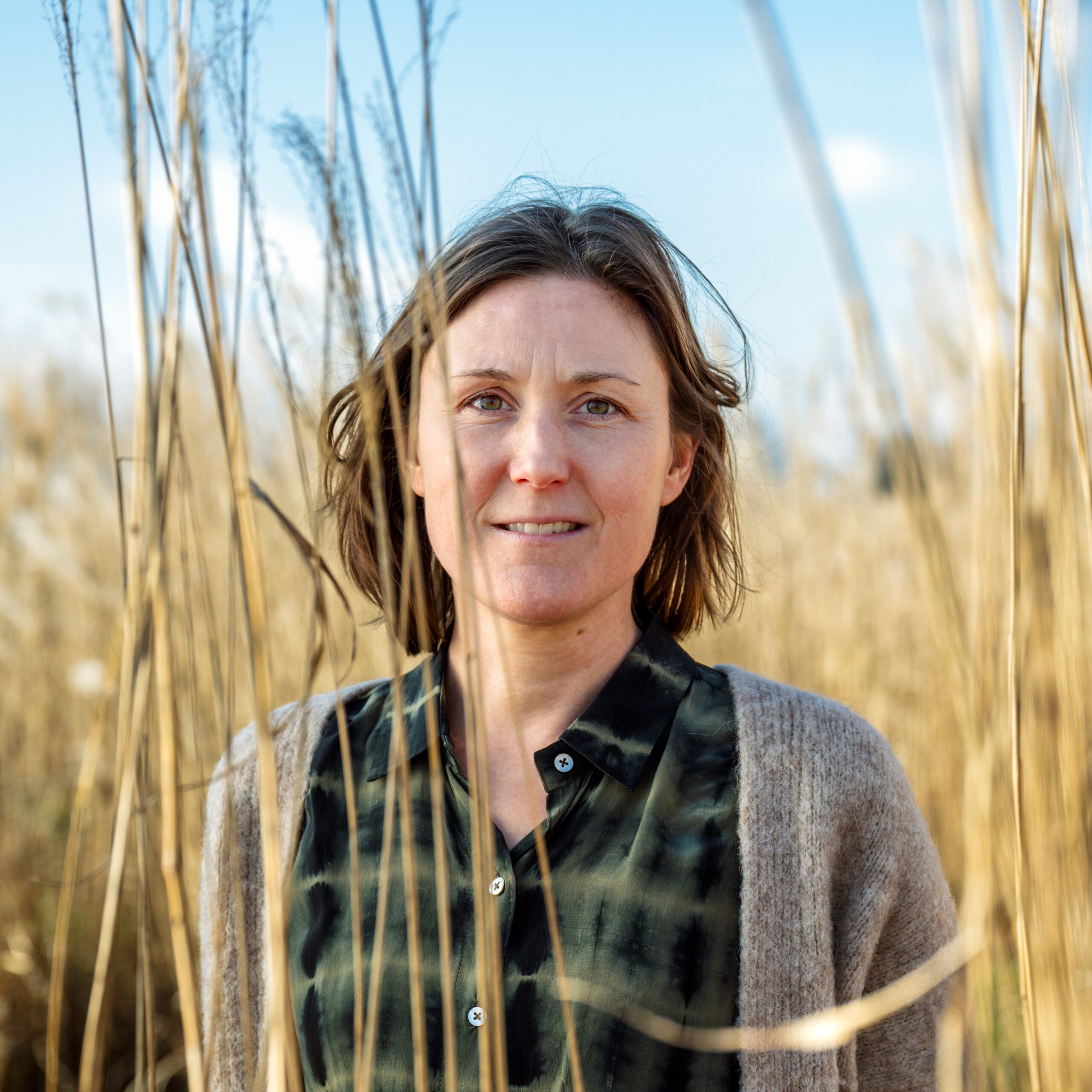
dr. Nina de Roo
Nina de Roo (Phd) is senior researcher Responsible Transformations at Wageningen Socio & Economic Research (WUR). She combines Science & Technology Studies with concepts from transitions studies and political economy to work on justice in the agri-food domain. Her current research pivots around issues of contestation, justice and governance in relation to transitions in agri-food systems. Some of her recent projects are about ‘phasing out’ in transitions (see recent report), contestations on glyphosate in the science-policy interface, and the development of innovative methods to make productive use of conflict in dialogues about the future of the Dutch food system.
In the past she has been involved in action research and advisory work on social inclusion and power dynamics in food systems, particularly in low and middle income countries. Her PhD research was about the socio-political dimensions of agricultural technology promotion in Ethiopia (see one of the published articles here). In her post-doc she studied the roles of her colleagues at Wageningen University & Research took up n polarised debates (such as the nitrogen debate or the future of the food system), with the aim to learn and improve our practice within WUR (see publication here).
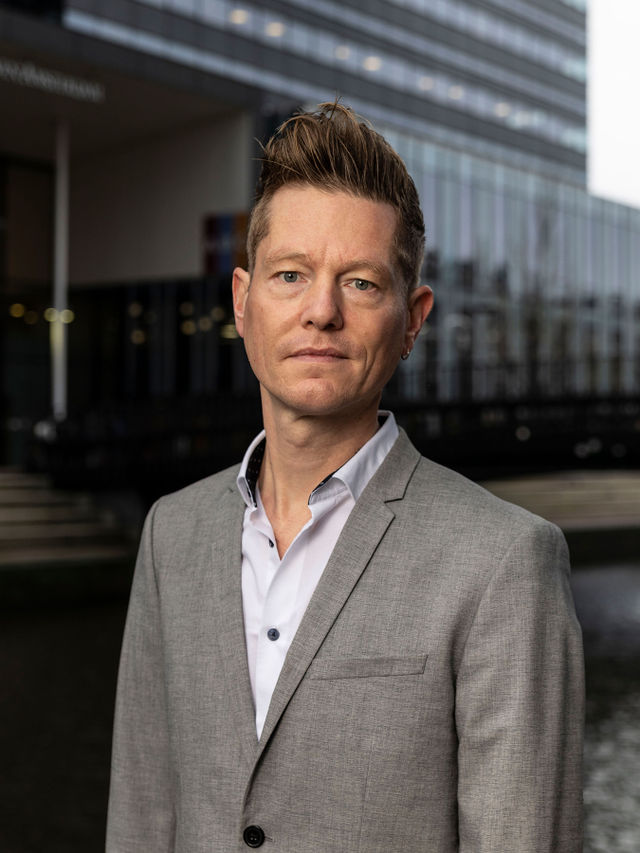
dr. Martijn Dekker
dr. Martijn Dekker is a political anthropologist, specialised in ‘contentious politics’, resistance, and ‘critical security studies’. He has done extensive research in the Middle East, studying how Palestinians organise their own security, and how they resist the Israeli Occupation. He’s also studying (embodied) activism, “direct action”, and civil disobedience in The Netherlands.
His research interests revolve mostly around the relations and interactions between people and (political) institutions. He specifically focuses on social movements and activism, and how people and communities organise themselves.
Martijn Dekker has been awarded Teacher of the Year at the Faculty of Social and Behavioural Sciences in 2014 and 2019.
Integrity for whom? Power, bias, and justice in research
Abstract:
In this workshop, we will examine how power structures and researcher bias have contributed to existing understandings of what counts as ‘good research’. We will start the workshop with two lightning talks providing some critical perspectives on dominant approaches to research integrity and open science, with the goal to stimulate reflection. First, Krishma Labib will present herwork on the relationship between research integrity and research fairness, in which she argues that dominant research integrity initiatives are in conflict, rather than aligned with fairness. Next,Marián Crespo will introduce the concept of ‘opacity’, as articulated by decolonial scholars, and explore how it might be meaningfully integrated into the open science movement to support more ethical and equitable knowledge-sharing. Following this, we will ask the group to actively reflect on and provide ideas about how to deconstruct dominant understandings of ‘good research’ so as to take diverse perspectives into account. This involves asking: Whose standards are reflected in existing guidance on research integrity? What histories of power shape our understanding of ‘good research’? In what ways can research integrity and open science reproduce injustice —even when presented as neutral or universally beneficial? How can we center justice and injustice concerns within conversations about research integrity?
Biographies:
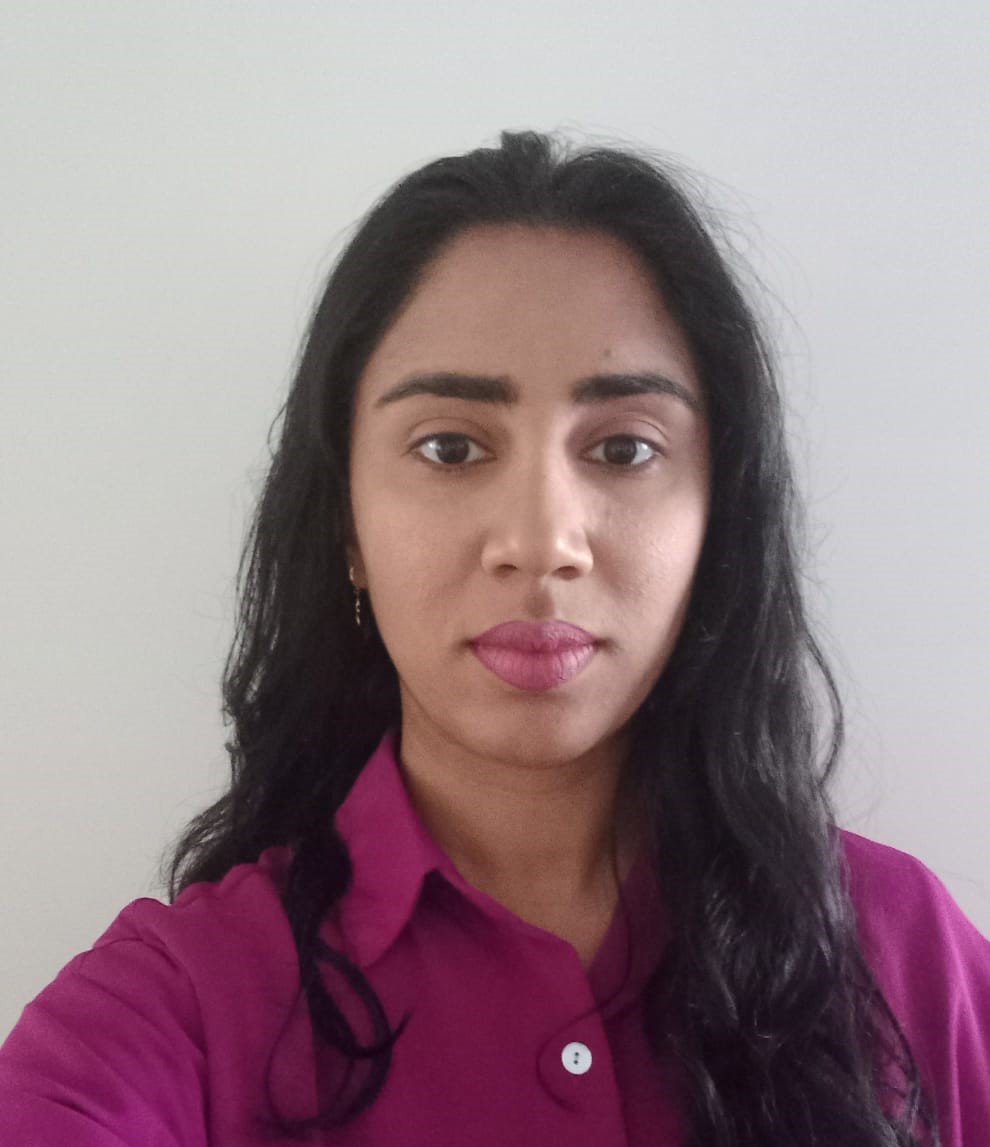
dr. Krishma Labib
Dr. Krishma Labib is an Assistant Professor at the Department of Philosophy at Vrije Universiteit, as well as Coordinator of the Amsterdam Expertise Center for Research Integrity and Open Science (RIOS). Krishma’s research focuses on issues pertaining to justice and injustice within the fields of research integrity and open science. She is also involved in teaching and coordinating research integrity to PhD candidates at the VU.
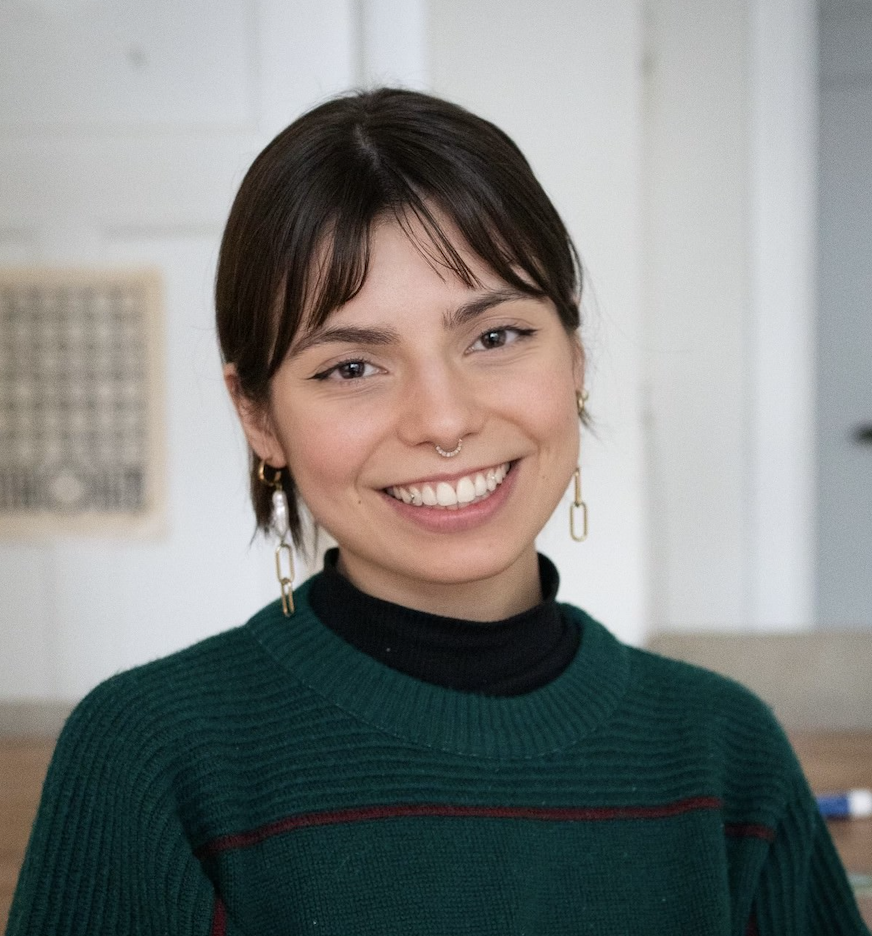
María de los Ángeles Crespo López
María de los Ángeles Crespo López is a research assistant at the Department of Philosophy at Vrije Universiteit and a publication steward at Amsterdam UMC. Her current work looks at open science through a decolonial lens, with a focus on justice and inclusion in research practices. Outside academia, she is involved in ISSUE: An Archive of Collective Struggle, an independent queer magazine and community center. In this role, she helps build for connection, collective reflection, and knowledge sharing.