
The NRIN Happy Hour offers free monthly webinars on topics related to Research Integrity, Research Ethics, Open Science and Responsible Conduct in Research. The webinars aim to offer a space for the mutual exchange of learning and promote informal discussions on issues related to good scientific practices. The webinars are open to anyone interested in these topics!
The webinars are open to the Dutch and international scientific community!
The recordings are made available after each webinar.
Is there a topic you would like to hear about? Would you like to present at the NRIN Happy Hour webinars? Feel free to contact us at info@nrin.nl
Key Information
When
Second Thursday of the month, 16:00 CET/CEST (1 hour)*
*We may sometimes change the date for the webinar due to the availability of the speaker
Where
Online (MS Teams).
Topics
Various on Research Integrity / Ethics, Open Science and Responsible Conduct of Research.
Lecturers
Experts in the field of good scientific practices.
Audience
Students (including bachelor and master students), early career researchers (including PhD candidates and junior researchers), senior career researchers and academics, policy makers and anyone with an interest in the topics presented. Both in the Netherlands and internationally.
Language
English.
Price
Free.
Registration
Required through Zoom. Click on the registration link to register for each webinar!
Programme
prof. dr. Hub Zwart (Erasmus University Rotterdam)
Consortium Authorship: a philosophical assessment of emerging authorship practices in team science
18th February 2027 (16:00 – 17:00 CET)
Past Happy Hours
February 2027
Consortium Authorship: a philosophical assessment of emerging authorship practices in team science
18th February 2027, 16:00 CET
Overview
Traditional conceptions of academic authorship, e.g., the seemingly self-evident assumption that an author is someone who actually writes a text, are challenged by the complexity, scale, and collaborative nature of scientific research. Authors are expected to make a substantial contribution and to assume accountability for all aspects of the work, but in practice, many individuals listed as authors fail to meet all these criteria, notably in life sciences and biomedical fields. In view of this tension between norm and practice, new conceptions of authorship have emerged, reflecting the growing importance of team science. This talk assesses whether consortium authorship as an emerging practice (also known as ‘group authorship’ or ‘team authorship’) offers a viable approach. Besides practical benefits, there is a normative dimension behind this concept, as it aims to acknowledge the importance of collaboration (seeing it as more than the sum of contributions attributable to individuals), while at the same time raising numerous ethical questions. On the one hand, it builds on the tendency towards anonymisation and impersonalisation discernible in academic authorship, in the natural sciences, but also in the humanities. At the same time, how will it affect authorship as a practice of the self (writing as an opportunity for individuation)?
About the Speaker

prof. dr. Hub Zwart
Hub Zwart studied philosophy and psychology at Radboud University Nijmegen, where he defended his thesis in 1993. In 2000, he became a full professor of philosophy at the Faculty of Science at Radboud University Nijmegen. In 2018, he was appointed Dean of Erasmus School of Philosophy (Erasmus University Rotterdam). Key publications include two open-access monographs: Tales of Research Misconduct (Springer/Nature, 2017) and Continental Philosophy of Technoscience (Springer/Nature, 2022). He is editor-in-chief of the Library for Ethics and Applied Philosophy (Springer) and has coordinated four European projects, including PRINTEGER (on research integrity) and IANUS (on trust in science).
Chair
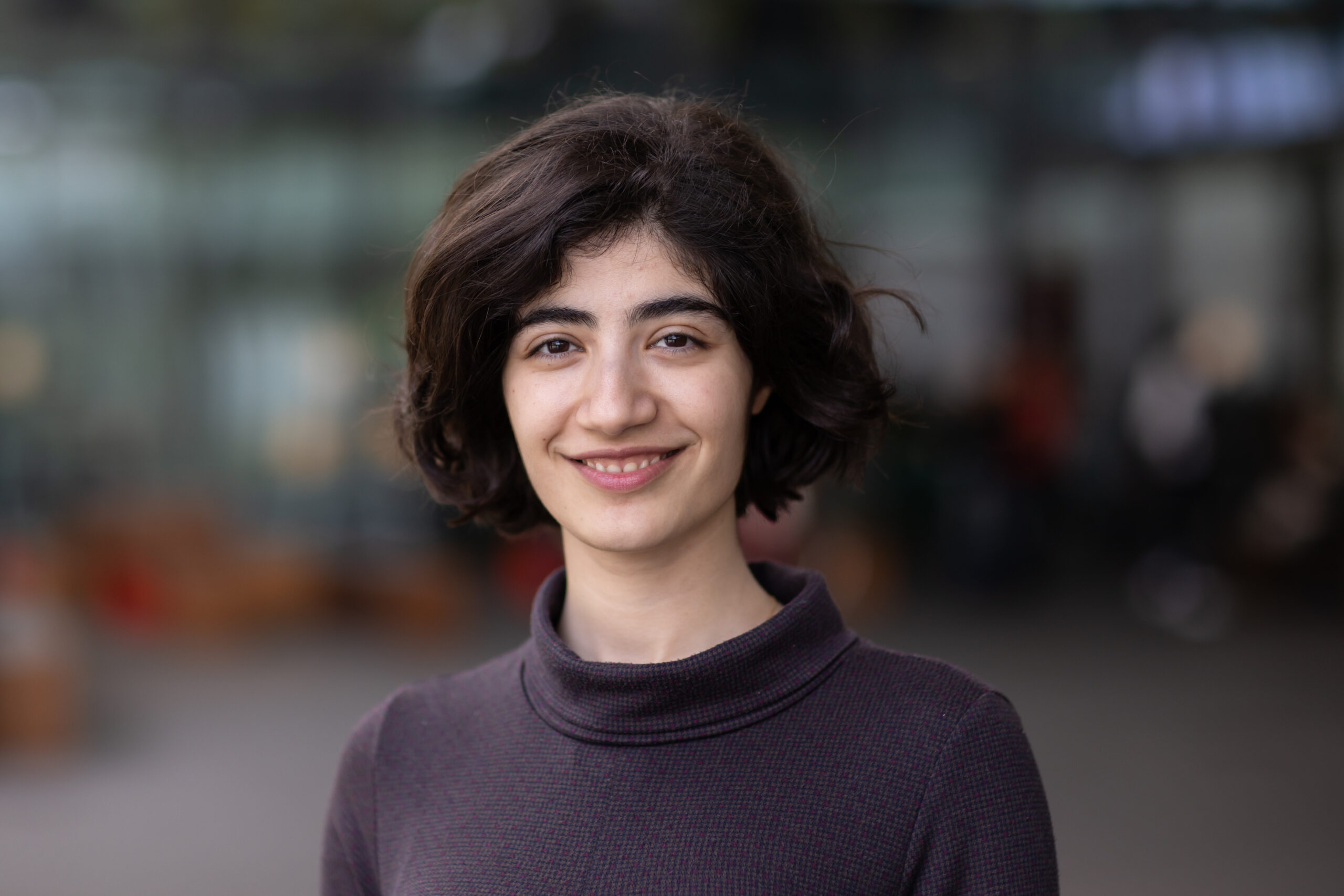
Sajedeh Rasti
Sajedeh Rasti is a fourth-year doctoral candidate at Eindhoven University of Technology (TU/e). Her research focuses on improving scientific coordination in the social sciences, including how to encourage scientists to participate in large-team collaborations, research prioritisation, and long-term planning, while focusing on the role of other scientific stakeholders in improving coordination. She is also co-founder of the Paul Meehl Graduate School, which offers free meta-scientific workshops for graduate students and early-career researchers.