The NRIN Masterclass aims to advance the knowledge on Responsible Conduct of Research, by inviting experts in the field to present their latest research findings.
The NRIN Masterclass will engage the Dutch community in an interactive dialogue, allowing mutual learning, exchange and critical reflections on the topics presented.
The NRIN Masterclass will consist of onsite sessions, with the recording of the lecturer later included on the NRIN Masterclass page.
Would you like to share your latest research on the topic above? Would you like to present on the NRIN Masterclass? Feel free to email us at info@nrin.nl! We would be delighted to organise a session together!
Key Information
When
There is no fixed periodicity for the NRIN Masterclass. The dates for each lecturer will be decided with the invited experts.
Where
Onsite (each masterclass will be recorded and later added to the page)
Topics
Various on Research Integrity / Ethics, Open Science and Responsible Conduct of Research.
Lecturers
Experts in the field of good scientific practices.
Audience
Students (including bachelor and master students), early career researchers (including PhD candidates and junior researchers), senior career researchers and academics, policy makers and anyone with an interest in the topics presented. Both in the Netherlands and internationally.
Language
English.
Price
Free.
Registration
Required.
Programme
More to be announced!
Past Masterclasses
Operational tensions in AI ethics and research evaluation, based on the AIOLIA project (prof. Alexei Grinbaum, CEA, France)
VU Amsterdam – Agora 5 room
2nd March 2026 (14:30 – 16:00 CET)
Facilitating Research Culture change: tools, removing barriers, incentives, and norming (Dr. Tim Errigton, Center for Open Science)
VU Amsterdam – Aurora room
13th January 2025, 12:00 – 13:00 CET
Operational tensions in AI ethics and research evaluation, based on the AIOLIA project
Prof. Grinbaum, an expert in AI Ethics, will give a lecture on this topic. How are GenAI developments changing the landscape of ethics review? How do issues of responsibility, transparency and respect for human dignity stand in tension in actual research contexts? With involvement in multiple projects that help ethics reviewers, developers and policymakers identify which ethical issues are relevant and urgent in developments in GenAI, he is well placed to show us the current state of applications with AI technologies. Prof. Grinbaum’s talk will build on the AIOLIA project he currently coordinates. The AIOLIA project (link) is an EU-funded project investigating how AI influences and potentially changes human cognition and behaviour. The project aims to develop guidelines for ethics reviewers and training for researchers and developers. As a reviewer himself, he is very experienced in identifying the relevant ethical issues in, for example, GenAI-led research.
Speaker
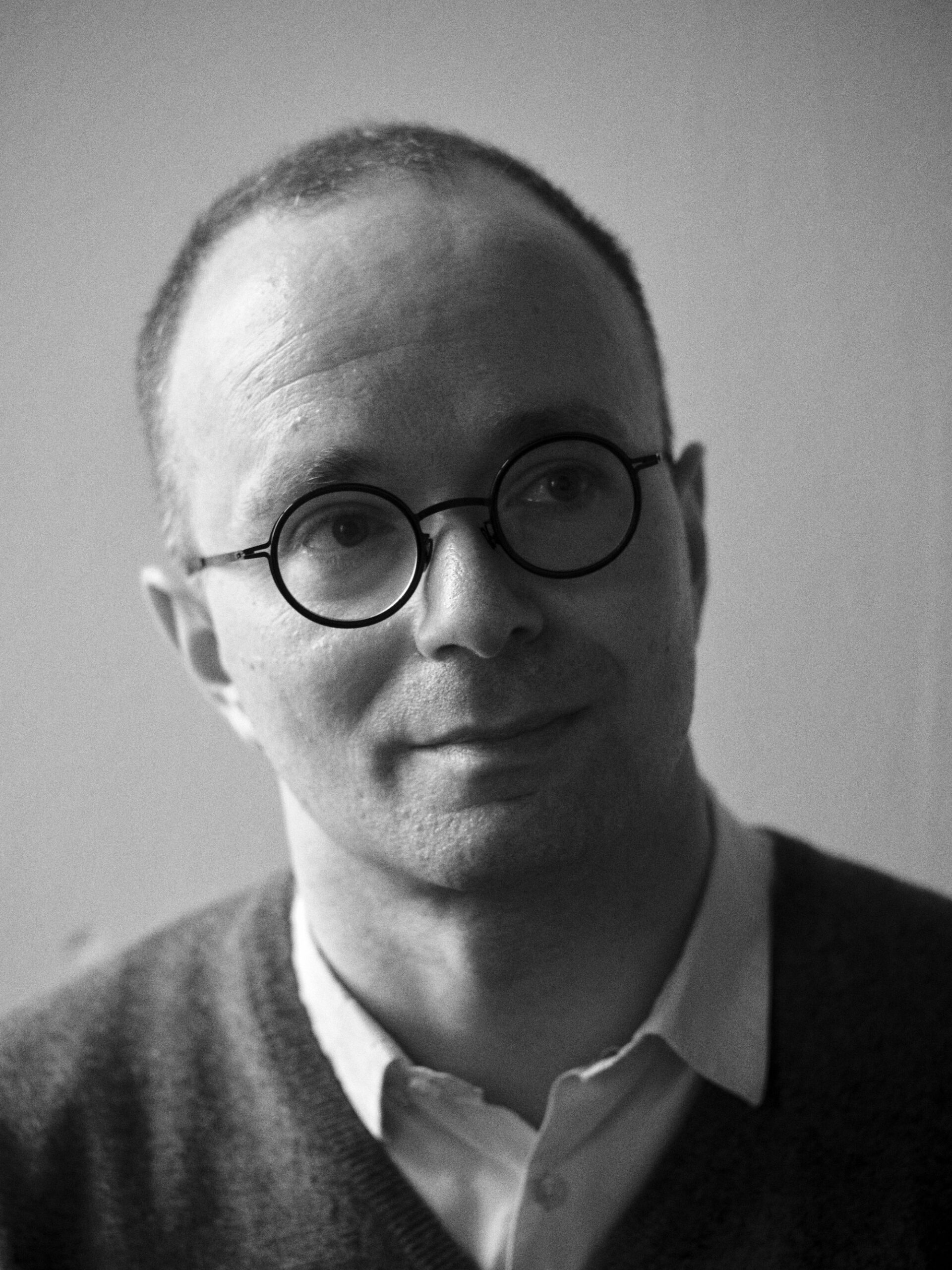
Prof. Alexei Grinbaum
Alexei Grinbaum is a senior research scientist at CEA-Saclay with a background in quantum information theory. He writes on ethical questions of emerging technologies, including robotics and AI. In AI ethics, his scientific interest is in the field of watermarking LLM outputs with applications in education (OpenLLM project). Grinbaum is the chair of the CEA Operational Digital Ethics Committee and a member of the French National Digital Ethics Committee (CCNEN). He coordinates the EU project AIOLIA on the ethics of AI in human cognition and behaviour. He also contributes to other EU projects on AI ethics, focusing on professional training for students and engineers, and serves as an ethics expert to the European Commission. His books include “Mécanique des étreintes” (2014), “Les robots et le mal” (2019), and “Parole de machines” (2023). https://irfu.cea.fr/Pisp/alexei.grinbaum/
Moderator
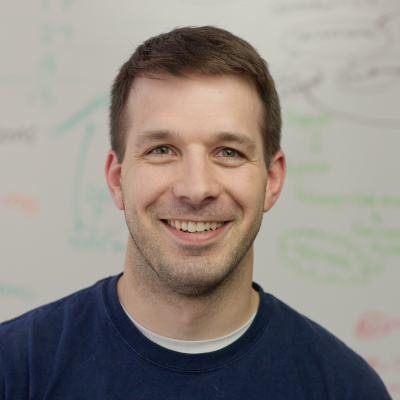
Dr. Tim Errington
Tim Errington is the Senior Director of Research at the Center for Open Science (COS) that aims to increase openness, integrity, and reproducibility of scientific research. In that position he conducts and collaborates with researchers and stakeholders across scientific disciplines and organizations on metascience projects aimed to understand the current research process and evaluate initiatives designed to increase reproducibility and openness of scientific research. These include large scale reproducibility projects such as the Reproducibility Project: Cancer Biology and the DARPA supported Systematizing Confidence in Open Research and Evidence (SCORE), and evaluation projects of new initiatives such as open science badges, Registered Reports, and a novel responsible conduct of research training.
Errington received his PhD in Microbiology, Immunology, and Cancer Biology from the University of Virginia, MA in Molecular and Cell Biology at University of California Berkeley, and earned a BS in Biology and Chemistry at St. Lawrence University.
Program
| 14:30-14:40 | Welcome
prof. dr. Mariëtte van den Hoven (Amsterdam UMC) & prof. dr. Julia Priess-Buchheit (Kiel University, Germany) |
| 14:40 – 15:50 | prof. dr. Alexei Grinbaum – Operational tensions in AI ethics and research evaluation, based on the AIOLIA project
Chair: dr. Tim Errington (Center for Open Science, USA) Q&A |
| 15:50 – 16:00 | Closing session
prof. dr. Mariëtte van den Hoven |
Past Masterclasses
Facilitating Research Culture change: tools, removing barriers, incentives, and norming
Research can be improved to increase efficiency in the accumulation of knowledge. This requires changes to the present culture, and a number of open science practices, such as preregistration, open data and making preprints, have been proposed to help enable this change. Requiring change though is not sufficient. A strategy to enable change is required, both to start the adoption of practices and to scale and sustain those practices. This talk will present examples of implementing culture change through focused strategies and through a more decentralized approach.
This NRIN Masterclass is part of the joint NRIN & NLRN Research Symposium – Capacity Building for Open Science. More information can be found here.
Dr. Tim Errington
Biography
Tim Errington is the Senior Director of Research at the Center for Open Science (COS) that aims to increase openness, integrity, and reproducibility of scientific research. In that position he conducts and collaborates with researchers and stakeholders across scientific disciplines and organizations on metascience projects aimed to understand the current research process and evaluate initiatives designed to increase reproducibility and openness of scientific research. These include large scale reproducibility projects such as the Reproducibility Project: Cancer Biology and the DARPA supported Systematizing Confidence in Open Research and Evidence (SCORE), and evaluation projects of new initiatives such as open science badges, Registered Reports, and a novel responsible conduct of research training.
Errington received his PhD in Microbiology, Immunology, and Cancer Biology from the University of Virginia, MA in Molecular and Cell Biology at University of California Berkeley, and earned a BS in Biology and Chemistry at St. Lawrence University.
Recording Available!
Presentation Available!
- Presentation slides